Build The Cost Floor
Fiber laser operating cost per hour is the internal cost to keep the machine productive before margin. Keep ownership, power, gas, maintenance, overhead, and service scope separate so another estimator can see where each number came from.
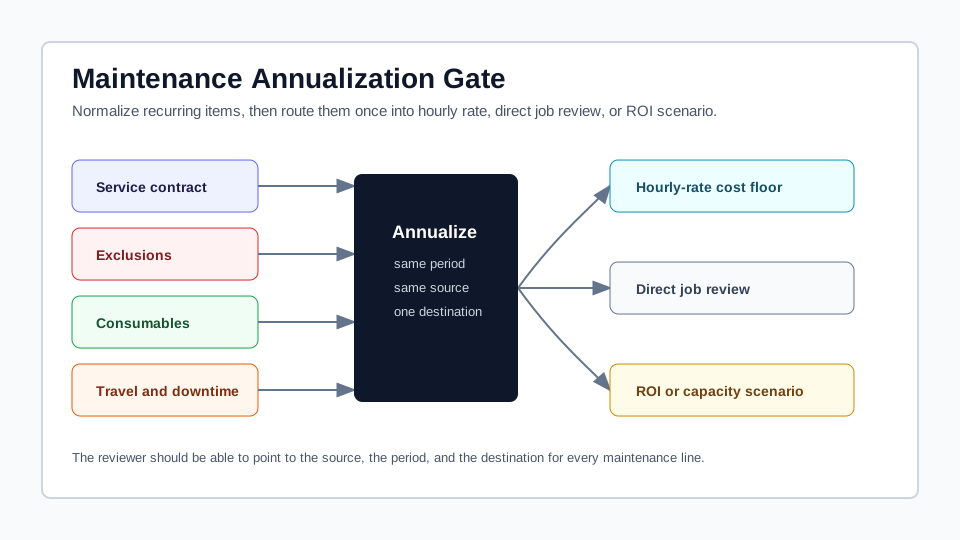
The cost floor is a review gate. Collect each category once, then decide whether it belongs in hourly cost or in a separate direct job line.
Hourly Equation
Keep the hourly floor explicit before any maintenance or overhead treatment gets folded into a quote.
Hourly cost floor = depreciation per hour + labor per hour + energy per hour + assist gas per hour + consumables per hour + maintenance per hour + facility per hour + overhead per hour
If the shop keeps annual records, divide each annual bucket by annual productive machine hours before adding the lines. That keeps the denominator the same across depreciation, labor, energy, gas, consumables, maintenance, facility, and overhead.
| Variable | What it means | Preferred source | Do not count again in |
|---|---|---|---|
| Depreciation per hour | Annualized ownership cost spread across productive hours. | Capital record, financing treatment, useful life, productive-hour policy. | Direct equipment purchase, ROI scenario, or separate job surcharge. |
| Labor per hour | Wages, burden, and shift coverage tied to machine productivity. | Payroll records and reviewed labor policy. | Energy, maintenance, or overhead if those lines already include the same labor. |
| Energy per hour | Electricity, demand charges, and auxiliary loads allocated to the machine. | Utility bills, meter logs, and the energy calculator. | Facility overhead if the same utility line is already pooled there. |
| Assist gas per hour | Gas flow, price, nozzle strategy, and duty cycle. | Supplier invoices, gas meters, and the quote workflow. | Direct gas surcharge if the hourly rate already includes gas. |
| Consumables per hour | Nozzles, lenses, filters, windows, and wear parts. | Machine logs, service tickets, and storeroom records. | Maintenance if the same wear item is already inside that bucket. |
| Maintenance per hour | Scheduled service, repair allowance, and contract scope. | Service agreement, maintenance logs, and the service-contract checklist. | Overhead or direct repair lines that already capture the same event. |
| Facility per hour | Space, cooling, exhaust support, and machine-area occupancy. | Facility policy and overhead allocator. | Energy or overhead if those pooled lines already include the same support cost. |
| Overhead per hour | Admin, quoting, supervision, software, and shared shop load. | Overhead allocation policy and the cost-center model. | Labor or facility if the same burden is already absorbed there. |
Fiber Laser Machine Maintenance Cost Categories
Treat maintenance as a category map, not a bundled service price.
| Cost area | Data to collect | Where it flows next |
|---|---|---|
| Ownership and utilization | installed machine cost, financing treatment, expected life, productive machine hours, idle time | Shop hourly rate |
| Power and facility load | measured kW, electricity tariff, demand charges, chiller load, exhaust load, standby time | Energy calculator |
| Assist gas and consumables | gas type, flow rate, gas price, nozzles, lenses, filters, protective windows, wear parts | Laser quote workflow |
| Maintenance and service | planned maintenance, consumables, service contracts, downtime, emergency repairs, travel, exclusions | Service contract checklist |
| Overhead and margin | rent, insurance, supervision, admin, sales effort, software, quoting time, target margin policy | Overhead allocator |
Worked Cost Floor
Use one packet to test the shape of the model before you trust the general rule.
| Case line | Example case | Reviewer check |
|---|---|---|
| Installed machine cost | vendor quote + installation + training | The quoted configuration matches the capital record. |
| Productive hours | annual machine hours after idle and changeover | The same hour base is used for depreciation and overhead. |
| Measured load | cutting load + auxiliary load + standby load | Power comes from meter data or OEM documentation. |
| Maintenance scope | service contract + scheduled maintenance + wear parts | The contract is not counted again inside another rate line. |
| Overhead policy | machine-hour allocation with reviewer signoff | The shop can explain why this machine carries that share. |
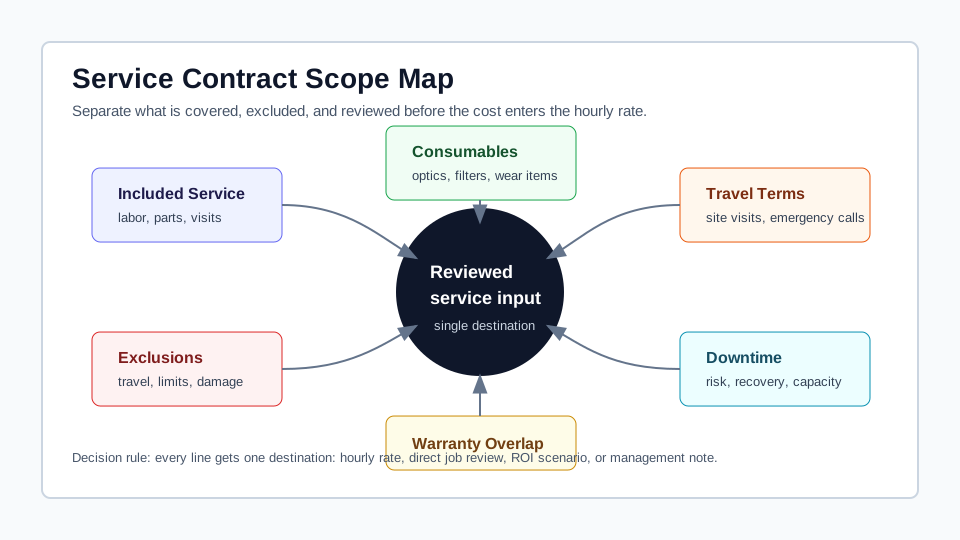
A service contract only matters once the scope, exclusions, downtime treatment, and review date are written down.
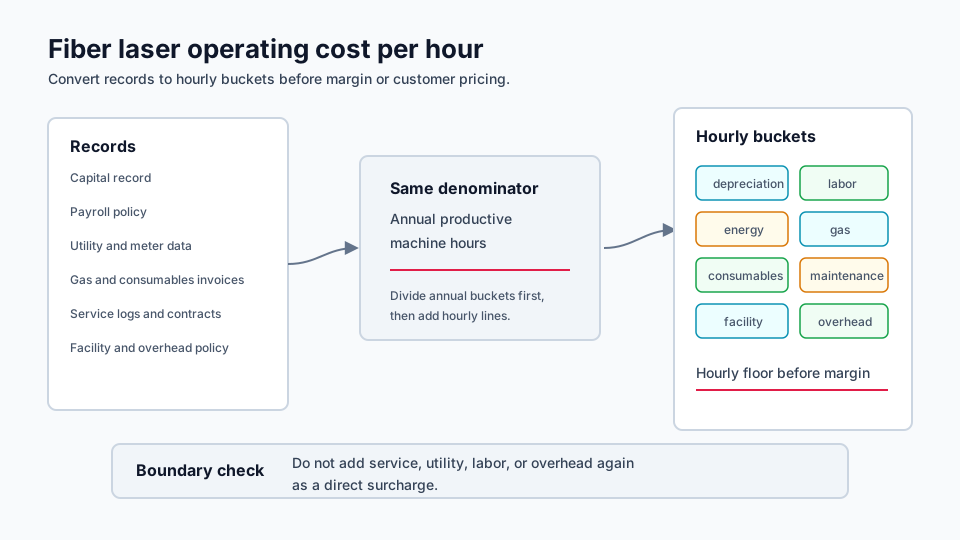
The ledger keeps each hourly bucket visible so annual records can be converted without hiding the double-count boundary.
Keep The Lines Separate
The operating-cost page is useful only if each line stays in its own lane:
- do not count service contracts in overhead and again in maintenance;
- do not hide downtime inside a generic maintenance number when the log can separate it;
- do not use a brochure price as a public benchmark;
- do not let energy disappear into a machine-rate assumption if the tariff needs its own review;
- do not mix the internal cost floor with customer margin until the floor is visible.
Boundary Ledger
Use this boundary check before the hourly rate goes into the quote packet:
| Line | Keep inside hourly cost when | Keep outside hourly cost when |
|---|---|---|
| Service contract | The contract is a recurring machine support cost. | The contract is a one-off repair, warranty exception, or job-specific request. |
| Energy | The utility bill and meter data are part of the machine's productive load. | The job has a special power draw, outsource charge, or separate facility policy. |
| Overhead | The shop pools admin, quoting, supervision, or software into machine-hour burden. | The quote already includes the same burden in another line. |
| Debt service | The shop has chosen to treat financing inside the ownership model. | The lender payment is already separated from the operating cost floor. |
| Direct job lines | A specific job needs extra travel, recovery, or vendor support. | The same event is already captured in maintenance or overhead. |
Source Order
Use the strongest available source first:
- Your own shop records, service logs, invoices, utility bills, and productive-hour reports.
- Current vendor quotes, warranty scope, support scope, installation scope, and lender terms.
- Internal accounting policy, productive-hour assumptions, and advisor-reviewed tax treatment.
- LaserCalc Pro calculator outputs derived from user-entered inputs.
No public operating-cost benchmark is assumed. Buyer interest can justify the page; it cannot prove what your machine will cost to run.
Methodology Boundary
Review the methodology before annualizing recurring service items. It records which evidence belongs in the cost floor, which items stay as direct-job exceptions, and when a vendor line is still too thin to move into the hourly-rate model.
Next Step
Carry the operating cost floor into the shop hourly rate calculator, the energy calculator, and the full laser cutting calculator. Use the power reference when the measured load needs a source note in the packet.